Open a backlog that nobody has tended for six months and you can watch entropy at work. A thousand items deep. Half of them duplicates. A third written in a shorthand whose author has left the company. And somewhere in that pile, nearly impossible to find, sit the five things you should genuinely build next.
Backlog refinement is the small habit that stops that from happening. It is not glamorous work, and it is the whole difference between planning that is calm and planning that is a fight.
What backlog refinement actually is
Refinement, which older teams still call grooming, is the ongoing work of keeping the top of your backlog ready to plan. That is the entire definition. It is not a big meeting and it is not a one-off cleanup. It is a steady habit of doing four things to the items near the top:
- Clarifying what each story actually needs, in plain language.
- Sizing it, so the team has a rough sense of effort.
- Splitting anything too big into stories that fit inside a sprint.
- Removing the things you are honestly never going to do.
Do this continuously and the backlog stays a tool. Skip it and it slowly turns into the place ideas go to be forgotten.
Why neglected backlogs rot
A backlog without refinement does not just get long. It gets untrustworthy, and an untrustworthy backlog causes very specific, very recognisable pain:
- Planning turns into archaeology. The team spends the meeting decoding vague stories instead of committing to work, which is the single most common reason planning runs long.
- Estimates become guesses. You cannot put a sensible story point on a one-line story nobody understands, so the numbers quietly stop meaning anything.
- Priorities vanish. When everything is in the pile and nothing is ordered, "what is most important?" has no visible answer, and the loudest request wins by default.
- Good ideas suffocate. The one genuinely valuable item is buried under three hundred half-thoughts, and nobody can dig it out.
Little and often beats one big session
The classic mistake is treating refinement as a marathon: a monthly two-hour meeting where the will to live slowly drains from the room. It does not work. By the end nobody is paying attention, and a month is long enough for the top of the backlog to drift out of date anyway.
Refine in small, regular doses instead. Thirty to sixty minutes once a week is plenty for most teams. Some fold it into a short midweek slot, kept well away from planning, so that by the time planning arrives the top of the backlog is already clear, sized and ordered. The aim is simple to state: the next sprint or two of work should always be ready to go.
What a refined item looks like
You do not need the whole backlog polished. That would be wasted effort, because priorities shift and most of the list will change before you ever reach it. You only need the top to be ready. A refined item near the top is:
- Clear. It says what needs to happen and why, in language anyone on the team can read without a translator.
- Sized. The team has given it a rough estimate, which doubles as a quiet check that everyone pictures the work the same way.
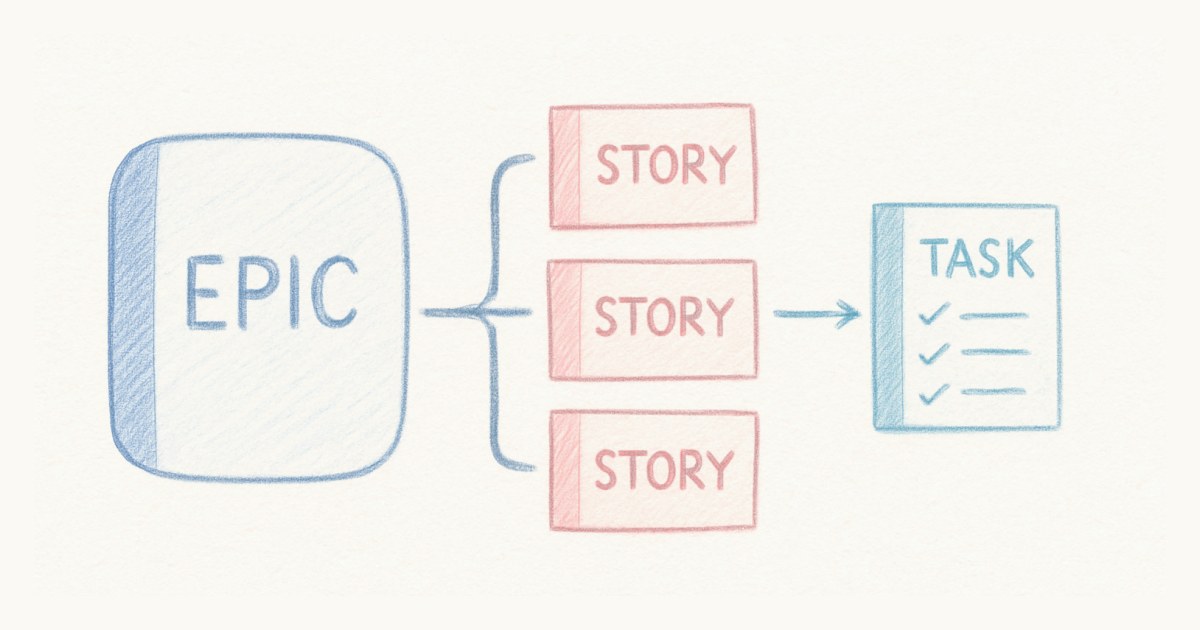
- Small enough. It fits comfortably inside a single sprint. Anything larger has already been split, and if it keeps refusing to fit, it is probably an epic rather than a story.
- Ordered. It sits in priority order, so there is no debate about what comes next.
Everything further down is allowed to stay rough. A backlog is a funnel, not a filing cabinet. Items sharpen as they rise toward the top, and most never need to.
Prune without guilt
The hardest part of refinement is deletion, and it is the most important. That feature request from last year nobody has mentioned since. The bug that turned out not to be a bug. They are not free to keep. Every dead item is noise that makes the live ones harder to see.
So be ruthless. If you would not build it in the next few months, and it is not genuinely waiting on something, archive it. A short, trustworthy backlog beats a long, comprehensive one every single time. You are not throwing the idea away. You are refusing to let it clutter the decision in front of you today.
Whose job is it?
Refinement is shared, and the split is clean. The product owner owns priority: what matters most, and in what order. The delivery team owns clarity and size: turning the top items into something it can confidently estimate and commit to. The product owner brings the why and the order; the team brings the how and the how-big. When those two jobs blur, refinement either stalls or collapses into one person dictating, and neither produces a backlog the team actually trusts.
This holds whether you run scrum or a more continuous kanban flow. Even a flow-based team needs the next items ready to pull. Refinement is just the upkeep that keeps "what's next?" answerable.
Keep it visible, keep it small
Refinement is far easier when you can actually see the backlog: the order, the sizes, the relative priority, all in one place, without digging through menus. A backlog you cannot take in at a glance is a backlog you will not maintain, and an unmaintained backlog is where we came in.
In Scrumpy the backlog sits right beside the board, so reordering, sizing and splitting are quick, ordinary actions instead of a chore you keep deferring. Give it thirty minutes a week and the pile never forms. Try it on your own backlog and see how much lighter planning gets when the top of the list is always ready.
Frequently asked questions
What is backlog refinement?
Backlog refinement, sometimes called grooming, is the ongoing habit of keeping the top of your backlog clear, sized and ordered so it is ready to plan. It means clarifying what each upcoming story needs, estimating it, splitting anything too big, and removing items you will never actually do.
How often should you refine the backlog?
Little and often beats one long session. Many teams spend thirty to sixty minutes once a week, or fold refinement into a short midweek slot. The goal is that the top of the backlog is always a sprint or two ahead and ready, so sprint planning is quick rather than a scramble.
What does a refined backlog look like?
Only the top matters. The next sprint or two of work should be clear enough to understand, roughly estimated, and ordered by priority, with anything too large already split into smaller stories. Items further down can stay rough until they rise toward the top.
Who is responsible for backlog refinement?
The product owner owns priority and decides what matters most, while the delivery team clarifies and sizes the work. Refinement is a shared activity: the product owner brings the why and the order, and the team turns the top items into something it can confidently commit to.