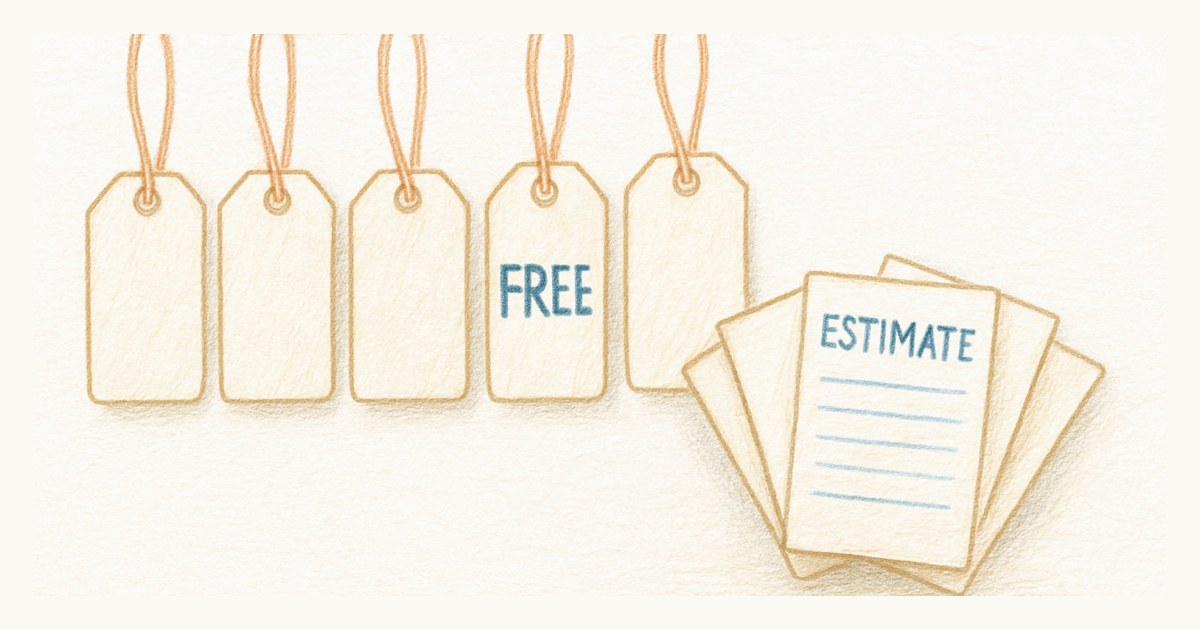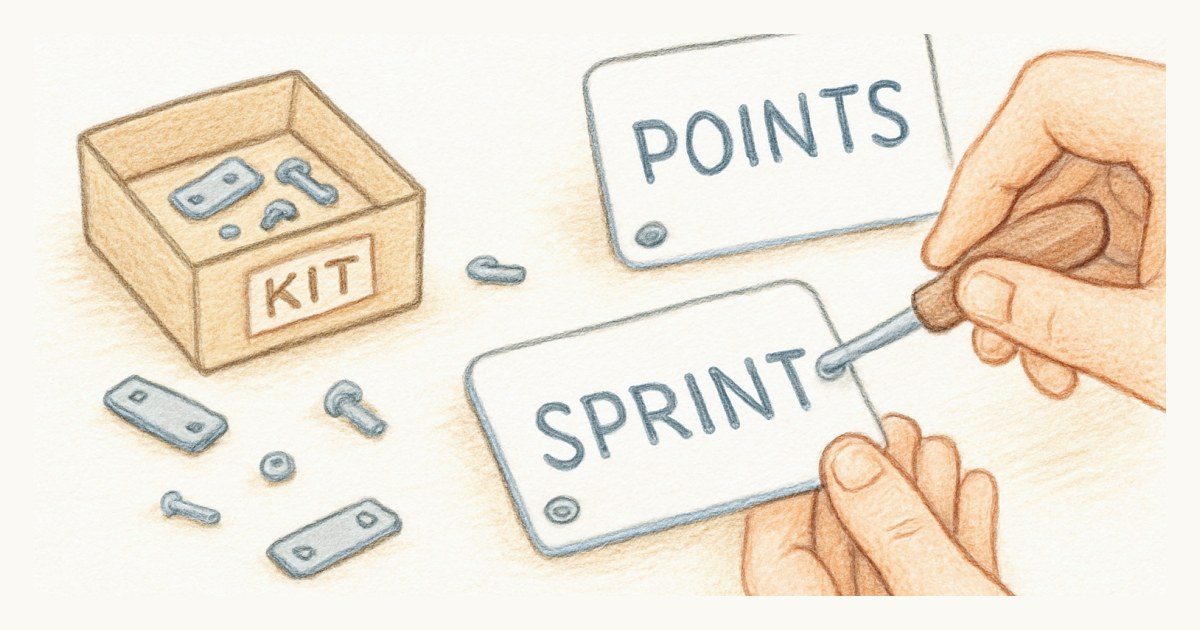
Open the Asana scrum template and look closely at what it actually gives you. It is a project with some sections and a handful of custom fields named the right things: story points, sprint, priority, acceptance criteria. That is the trick. Asana is not running scrum for you. It is handing you a labeled set of general-purpose parts and trusting you to keep them in the shape of scrum yourself.
For a lot of teams that is genuinely fine, and I do not want to undersell Asana, because it is very good at what it is for. If your work spans marketing, design, ops and engineering, and you need lists, boards, timelines, portfolios and goals in one place with strong automation stitching them together, Asana is one of the best tools you can pick. This is not a case of a weak product. It is a case of a strong product being asked to do a specific job it was not designed around.
Where the seams show
Scrum has a small number of load-bearing ideas, and Asana implements each of them as something adjacent rather than something native.
Take story points. In a scrum tool a point is a real, first-class thing the software understands. In Asana it is a custom number field you create and name yourself. It will hold the number, but it does not know the number means anything. Sprints are the same story: there is no sprint object, so a sprint becomes a section in a project or a separate project entirely, and the boundary between one sprint and the next is a convention you maintain by hand.
The gap that hurts most is measurement. Asana will not draw you a burndown or compute a velocity. Its own guidance on burndown charts is a how-to article, not a feature you switch on. If you want the chart, you build it as a line graph on a dashboard from your custom fields, and you keep building it, sprint after sprint. Velocity, the single number that makes scrum planning honest, is not something Asana calculates for you at all.
The cost curve
There is a money version of this too. Asana's free Personal plan tops out at two users, so a real team is on a paid plan immediately. Starter is the affordable tier, but the reporting and structure a growing scrum team reaches for, portfolios, goals, more serious dashboards, live on Advanced, which is more than double the Starter price per seat. And both paid tiers carry a two-seat minimum. The tool that felt inexpensive at the Starter sticker gets meaningfully pricier exactly at the point your process matures.
What native scrum removes from your plate
The argument for a dedicated tool is not that Asana cannot be forced into scrum. Clearly it can, teams do it every day. The argument is that you should not have to be the one holding it in shape.
In Scrumpy, a story point is a real field the tool understands, a sprint is an actual object with a start and an end, and your velocity and burn-up chart come from the points you complete, updating as you go. You do not assemble the reporting, and you do not maintain the convention that keeps last sprint separate from this one. It is one flat plan at $9 per editor with everything included, and viewers are free, so the stakeholders who want to follow the work do not each cost a seat.
If your team lives across many kinds of work and scrum is one small corner of it, Asana's breadth may still be the right trade, and I would keep it. But if the sprint is the main event and you are tired of rebuilding the burndown by hand every two weeks, a tool that treats scrum as the point rather than a template is worth an afternoon of your attention. You can run your next sprint on one and see the difference the first time the chart draws itself.
Frequently asked questions
Does Asana support scrum?
Not natively. Asana has a scrum template, but sprints are modeled as sections or separate projects, story points are just a custom number field you add, and there is no automatic velocity or burndown. You assemble scrum from general-purpose parts rather than switching it on.
Does Asana have story points and velocity?
Story points in Asana are a custom number field you create yourself, not a first-class feature. Velocity and burndown are not automated either. You can build charts on a dashboard from your custom fields, but Asana will not calculate a sprint velocity for you the way a dedicated scrum tool does.
Is Asana or a dedicated scrum tool better for sprints?
For cross-functional work across many teams, Asana's views, portfolios and automation are excellent. For running sprints specifically, a dedicated scrum tool gives you native sprints, points that roll into velocity, and a chart you did not have to build, all of which Asana leaves you to assemble.
How much does Asana cost?
Asana has a free Personal plan capped at two users. Paid plans start around $10.99 per user per month billed annually for Starter and around $24.99 for Advanced, which is where portfolios, goals and heavier reporting live. Both paid tiers have a two-seat minimum.