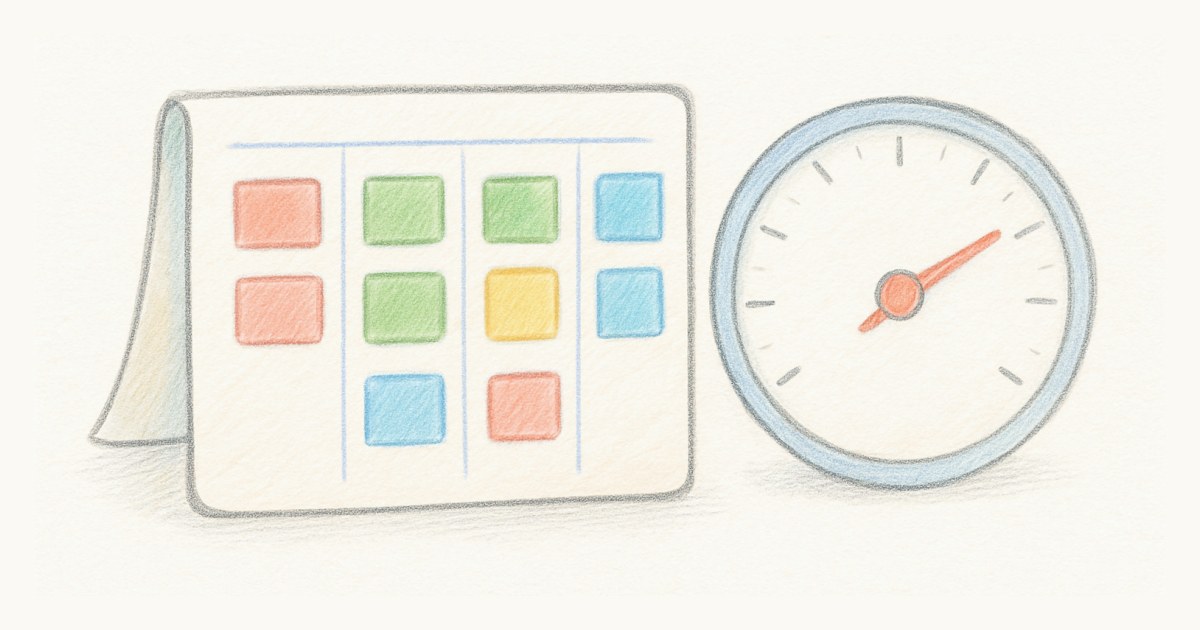
Let me clear up a myth first, because it gets Notion unfairly dismissed: you do not have to build sprints in Notion from scratch anymore. There is a genuine, native Sprints feature. You turn it on for a tasks database, and Notion gives you sprint assignment, board and calendar views, a progress ring, and even optional automation that opens and closes sprints for you. If your mental image of "sprints in Notion" is a hand-built database held together with formulas, that image is a few years out of date.
So Notion gets further into scrum than people expect. The question worth answering honestly is where it stops, because it does stop, and the wall is in a predictable place.
What Notion does well here
It is worth being clear about why so many teams reach for Notion in the first place. It is a genuinely flexible workspace, one surface for docs, wikis, notes and databases, all linked together with relations and rollups. For a team whose work is mostly writing, planning and knowledge, and whose "project management" is a few connected databases, Notion is a lovely place to live. Its native Sprints feature means that team can track a sprint without leaving the tool they already like.
None of what follows is an argument that Notion is bad at this. It is an argument that scrum has two halves, and Notion only ships one of them.
The half that is missing
Scrum is planning plus measurement. Notion handles the planning half well and leaves the measurement half to you.
There are no story points. There is no velocity. There is no burndown or burn-up chart. The Sprints feature will show you a progress ring for a sprint, which tells you how much is done, but it will not tell you how fast your team actually moves or whether the current sprint is tracking ahead of or behind that pace. If you want velocity, the path is to add your own effort property, then build a line chart grouped by sprint, and maintain it. Notion gives you the raw material and hands you the assembly.
For a team that estimates in points and plans against a real velocity, that is the whole ballgame, and it is missing.
Two other frictions show up as teams and databases grow. The first is performance: large Notion databases, once they reach into the thousands of records, get noticeably slower to load, and a sprint board you consult daily is a bad place for that. The second is guardrails. Notion is open by default, everything is editable, and on the free plan every member is effectively an owner. That flexibility is the point for a wiki and a liability for a board of record, where you want the plan to stay the plan.
Where a purpose-built board draws the line differently
The contrast is not that Scrumpy is more flexible than Notion, because it is not, and it does not try to be. The contrast is that the measurement half of scrum is built in rather than left as an exercise.
A story point is a real field the tool understands. Velocity is calculated from the points you actually finish. A burn-up chart draws itself as the sprint moves, so you can see at a glance whether you are on track without maintaining a single formula. The board is fast because it is a board and nothing else, and editing is scoped to editors while everyone else watches for free. You give up Notion's do-anything flexibility and get back the reporting that makes scrum planning honest.
The sensible way to think about it is not either or. Plenty of teams keep Notion for docs and specs and run their actual sprints somewhere the velocity is automatic. If you love Notion as a workspace, keep it for what it is great at. Just be clear-eyed that once your scrum needs estimation and a chart you can trust, that is the wall, and it is worth crossing rather than hand-building your way around. You can run a sprint with the reporting included and keep Notion for the writing.
Frequently asked questions
Can you run sprints in Notion?
Yes. Notion has a native Sprints feature you turn on for a tasks database, plus ready-made templates, so you are not building sprints entirely from scratch. It handles sprint assignment, board views and a progress ring, but it has no story points, velocity or burndown, so measurement is where it stops.
Does Notion have burndown or velocity charts?
No. Notion's Sprints feature has no story points, velocity, or burndown or burn-up charts built in. To track velocity you add an effort property yourself and build a chart by hand from it. Notion will not calculate a sprint velocity for you.
Is Notion good for scrum?
Notion is excellent for docs, wikis and flexible databases, and its native Sprints feature covers basic sprint tracking. It struggles when a scrum team wants estimation and reporting, and large databases can slow down, so teams that need velocity and burndown often pair it with, or move to, a dedicated tool.
Can clients view a Notion board for free?
Yes, to a point. Notion lets you invite free guests to specific pages, so a client can view a shared board without a paid member seat. The limit is that guests only see the individual pages you share, not a whole workspace section, so a full project view means sharing each relevant page.